
LVP Installed Over a Substrate Flattened to the Tolerance It Needs
We flatten and moisture-test the subfloor before installing luxury vinyl plank anywhere in the GTA, because LVP telegraphs even minor substrate irregularities to the surface in a way thicker flooring products don't.
Email Us for a Free Estimate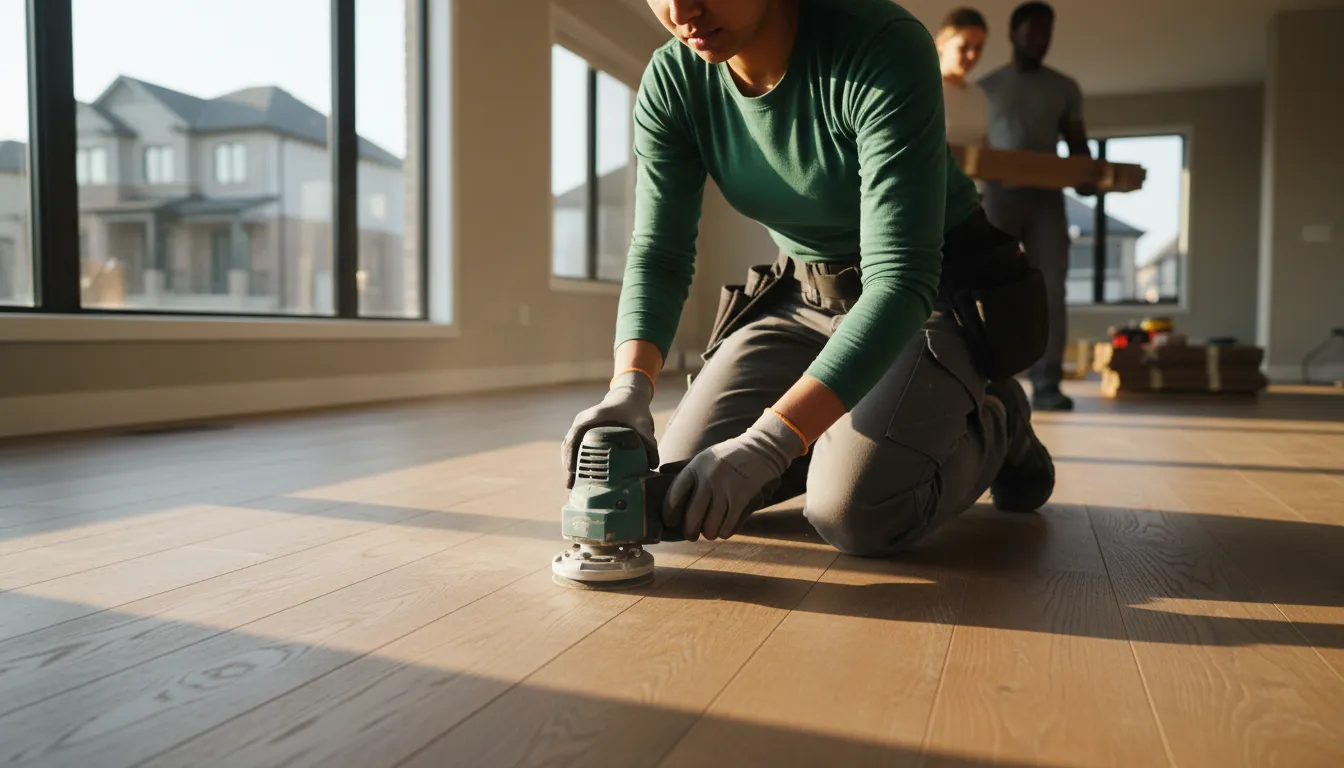
Why LVP Shows Subfloor Flaws That Other Floors Hide
LVP's thinness is part of its appeal — low profile, easy transitions, consistent look — but that same thinness means it has almost no ability to bridge over an uneven or poorly prepared subfloor. What's underneath matters more with LVP than with almost any other flooring type.
Flatness tolerance
We check the subfloor against a straightedge across multiple points in the room, correcting any high or low spots that exceed the tolerance the LVP manufacturer specifies, since exceeding it causes visible telegraphing and premature wear at seams.
Moisture testing for click-lock and glue-down
Concrete slabs are tested for moisture regardless of whether the LVP is a floating click-lock system or a glue-down product, since both can be affected by elevated moisture transmission from below.
Underlayment selection
Attached-pad LVP, separate underlayment, or none at all depending on the product line and subfloor — we follow the manufacturer's specific requirement rather than a default.
Expansion space at fixed obstacles
Even rigid-core LVP needs expansion room at walls, cabinetry toe-kicks, and transitions, which we account for in the layout.
Telegraphing and Seam Separation Point Back to Subfloor Prep
When LVP shows a visible ridge or dip that mirrors something in the subfloor below, or when seams start separating at a specific spot, the cause is almost always inadequate subfloor flattening before installation, not a defect in the plank itself.
We Flatten and Test First, Then Install to the Manufacturer's Substrate Requirement
Every LVP job starts with a flatness check and, where relevant, a moisture reading on the slab. We correct the substrate to the tolerance the specific product requires before the first plank is placed.
LVP Installation Process
The same substrate-first sequence for click-lock or glue-down LVP.
- 1
Substrate flatness and moisture check
We measure flatness across the room and test moisture on concrete slabs before proceeding.
- 2
Subfloor correction
High spots are ground down and low spots are levelled to bring the substrate within the product's required tolerance.
- 3
Underlayment or barrier installation
Applied according to the specific LVP product's requirement, which varies by product line.
- 4
Plank installation
Planks are installed following the manufacturer's layout and expansion requirements.
- 5
Transition and trim fitting
Transitions are set to allow for expansion while keeping a clean finished appearance.
Why Our LVP Installs Don't Telegraph
The substrate discipline that keeps LVP looking flat long-term.
Flatness checked before installation
Measured against a straightedge, not assumed acceptable by eye.
Moisture tested on slabs
Concrete tested before adhesive or click-lock LVP is installed.
Product-specific underlayment
Matched to the exact LVP line's requirement, not a generic default.
Expansion accounted for at obstacles
Toe-kicks, transitions, and walls all planned for movement.
Licensed & insured
Full liability coverage on every job.
GTA-wide scheduling
Crews available across the region from our Oakville base.
Luxury Vinyl Plank Questions
Why does my LVP floor show a ridge that matches the subfloor below?
That's telegraphing, and it happens when the subfloor wasn't flattened to within the tolerance the LVP manufacturer requires before installation. LVP's thinness means it has very little ability to bridge over an irregular substrate.
Is LVP suitable for a basement in the GTA?
Yes, LVP is generally well suited to below-grade installation, though the concrete slab still needs moisture testing beforehand, particularly in older basements where dampness may not be obvious at the surface.
Do I need underlayment under LVP?
It depends on the specific product — some LVP comes with an attached pad, some requires separate underlayment, and some is designed to go directly over a prepared subfloor. We follow the manufacturer's specific requirement for the product you choose.
Can LVP be installed over existing tile?
Often yes, provided the tile is flat, intact, and free of significant grout line depth that would telegraph through, which we assess during the site visit.
How does LVP handle temperature swings in a sunroom or three-season space?
Rigid-core LVP handles moderate temperature swings reasonably well, but a sunroom with significant temperature extremes needs a product line and expansion allowance suited to that specific exposure, which we'll discuss at the estimate stage.
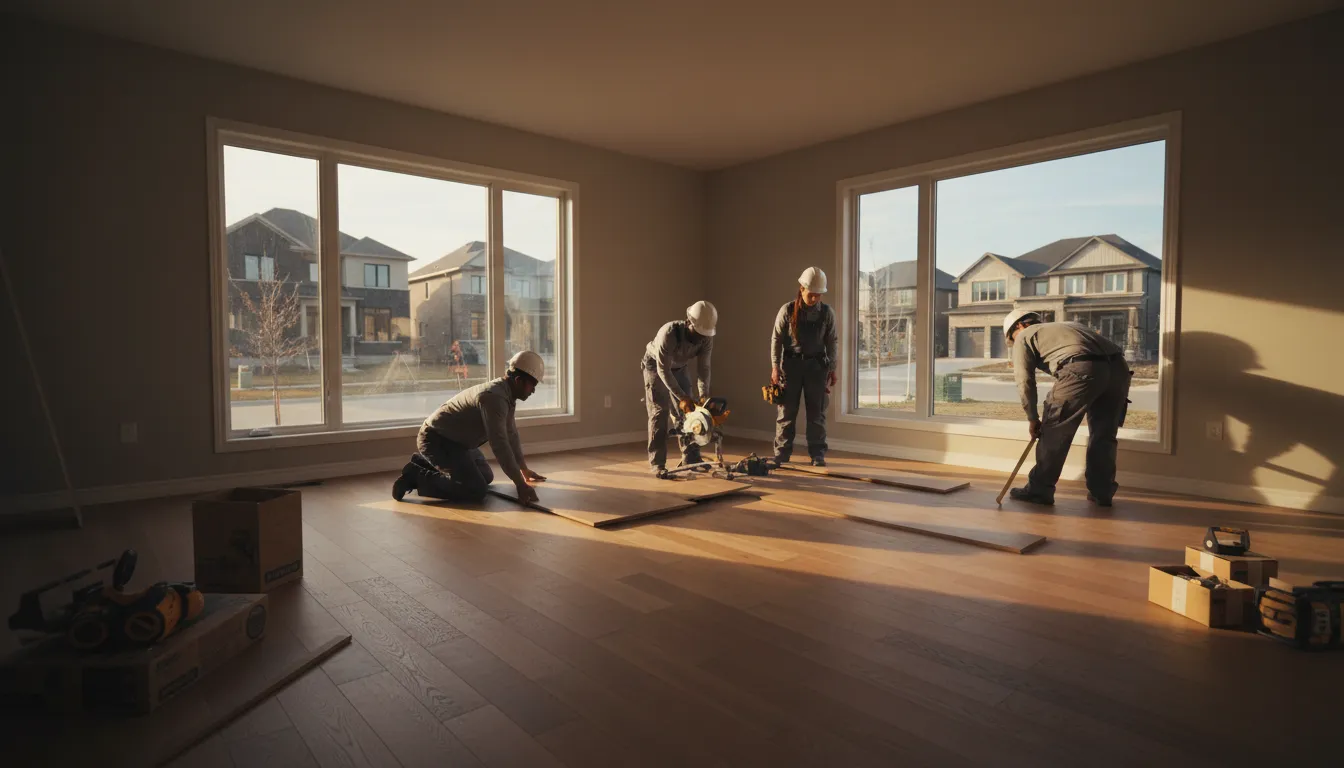
Ask Us About Subfloor Flatness Before Choosing LVP
Email us for a free quote on luxury vinyl plank installation.
Email Us for a Free EstimateLocal conditions matter — email us for same-day service.
Fall home-service conditions in Oakville, ON
Fall around Oakville, ON is the season to prepare your home before winter sets in.
Proudly Serving Oakville, ON
Local, on-time service throughout Oakville and the surrounding area.